That Time I asked a marine biologist about mermaids for a national newspaper
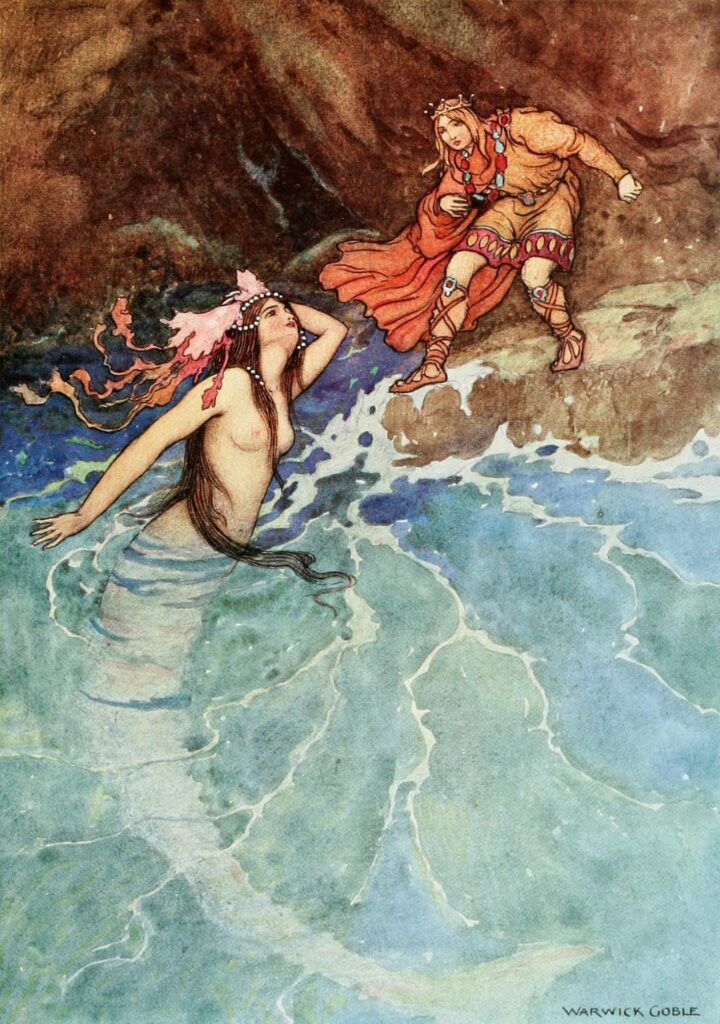
Fishermen have long been renowned for tall tales, but perhaps the tallest of all is that of mermaids. Mermaid legends are extremely old and have a degree of similarity, irrespective of which country they come from. All depict the creature as half-human, half-fish and sightings are generally said to be ill omens, foretelling bad storms, rough seas and death at sea. In fact, with a few notable exceptions, most mermaid stories are of fearsome sirens luring men to their watery graves. It has only been in the 20th century that the mermaid’s reputation got a romantic re-make, with Disney and Hollywood being the main stylists. Older versions of these stories say that mermaids yearn for a soul and that they can only get this by marrying a human, hence their stalker-like behaviour with men.
The last reported sighting was in 1947 when a fisherman from the Isle of Muck in the Highlands said he had seen a mermaid near the shore, sat on a lobster box, combing her hair. However, further research into the story does not bring forth a name for the fisherman or any more details, making it seem like a ‘fisherman’s tale’.
Hoaxes have also dented the idea of mermaids being real. The most famous of these was the Fiji mermaid, purportedly found by Japanese fishermen near the Fiji Islands, and brought to the New York-based American Museum in 1842. This ugly creature was found to be a composite of papier-mâché, a baby orangutan skeleton, a monkey head, and bits of different fish. Such hoaxes have circulated for thousands of years, perhaps the most recent being reports from Chennai after the Indian Ocean tsunami in 2004. The photos of the so-called mermaid turned out to be an older hoax, again using primate and fish parts.
Marine biologist, Dr. Vicki Howe explains why mermaids don’t exist, ‘There are many strands of evolution, of which fish and mammals are just two. Both humans and fish are vertebrates however these are two divergent evolutionary pathways and mammals are warm-blooded whereas fish are cold-blooded. That is a good starting point, I would guess, for refuting the existence of a fish-human hybrid.’
It has been suggested that sightings of mermaids may actually be of dugongs, or sea cows, that swim in shallow waters. ‘It’s nice to think dugongs, that are huge graceful animals with soft smiling faces, could be mistaken for mermaids,’ says Dr. Howe. ‘Sailors on long journeys at sea, working hard with poor diets and plenty of grog, may have resorted to wishful thinking.’ However, just to be on the safe side, any men hearing singing from the sea should step away from the shore before they become a victim of fishy fatal attraction.
Fatal attraction
The allure of some mermaids is akin to that feeling of fear you have when you walk close to the edge of a cliff. It is a pull that you know will end badly for the magnetic pull is to your doom. Mythology abounds with tales of, usually, men who left the safety of their shores to answer the call of the siren and ended up with ships dashed on rocks and bodies bloodied and drowned in the water. This was such an intense fear in old seafaring communities that amulets were worn to avoid hearing the siren’s song. Sailors avoided learning how to swim so that they would drown more quickly if they fell into the water. Many superstitions continue to live on in fishing villages around the world. For example, you don’t whistle at sea as this would be seen as challenging the winds and could cause a storm to be whistled up. If you spot a mermaid during a voyage, your ship is going to be wrecked. And yet mermaids were often carved onto the prow of a ship to guide the sailors home. While traditionally women were considered unlucky on a ship, the mermaid was of the sea and therefore exempt to such notions.
It seems in folklore, humans are as dangerous to mermaids as merfolk are to them. The most famous mermaid of all, from the story told by Hans Christian Andersen, was enchanted by the sight of a man and in search of his love to enable her to gain an immortal soul. The story ends badly with the little mermaid choosing to die rather than killing her beloved.
shell talisman ritual
This ritual allows you make a shell talisman to give you the protection of the merfolk
Moon phase: New Moon
Items needed: A shell that attracts you
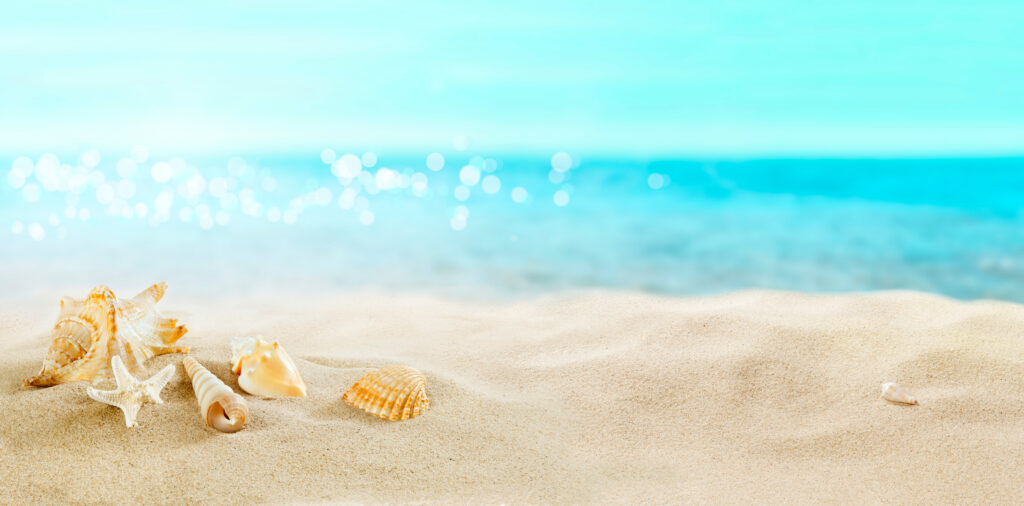
Shells are gifts from the sea. They are the remaining part of sea creatures after they have died and decomposed—essentially and energetically, the bones of the sea. This makes them perfect to use as talismans to connect with elemental water spirits such as mermaids and to gain protection from them.
This ritual works best if you find a shell on the beach yourself (be aware that some countries have laws against taking any shells away with you so check before you comb), but you can also buy a shell if you are land-locked or unable to find the right shell for you. It should resonate with you and feel good when you hold it.
Instructions:
• Begin by sitting in meditation for a few minutes. Try and clear your mind, letting thoughts come and pass without fixating on them. Hold your shell in your hand as you are doing this.
• When you are ready, cup the shell in both hands and bring it up to your third eye chakra, between your eyebrows.
• Imagine a golden light full of sparkles coming down from the heavens and entering the top of your head. This light infuses your whole body and exits your body at your third eye and goes into the shell.
• Imagine the shell glowing and pulsating with the golden light. Lower the shell and rest it in your lap.
• Turn your palms down on your thigh and imagine that the light gently stops coming in at your head and you “seal” in your energy.
• Whisper your intention into the shell. You might say, “I welcome magic and wonder into my life” or “I ask for the protection of the spirits of water” or perhaps “I intend this to be a talisman of safety at sea”. The last might be a good one to do if you’re undertaking a journey by sea.
• You can then carry the shell with you in your purse or on a necklace if it has a natural hole in it to make it suitable for that purpose.